
Task Scheduling
Capacity-aware placement, task dependencies, reservations, lease fencing and queue backpressure.
Filter before scoring
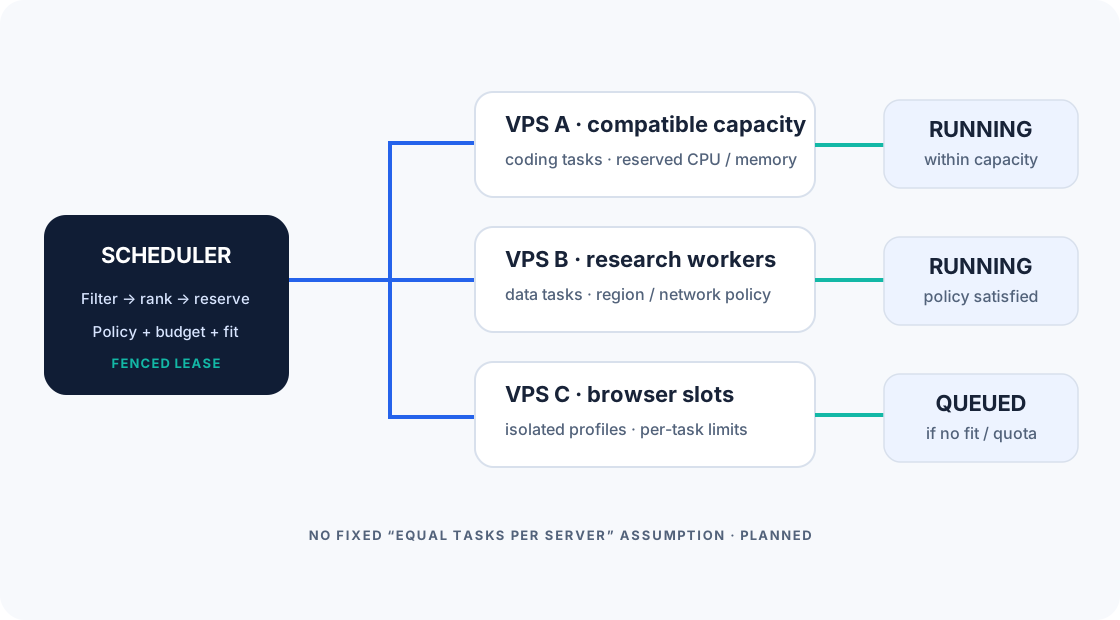
Hard filters include worker state, runtime availability, region and data policy, CPU/RAM/disk/browser slot capacity, concurrency caps, secret/provider access and deadline feasibility. A task with no eligible capacity remains queued instead of being assigned by default.
Rank compatible workers
Soft score can consider fragmentation, artifact locality, network quality, failure history, warm cache and server cost. These are design inputs to validate—not a published placement algorithm or observed performance claim.
Atomic reservation and lease
The intended transaction creates the attempt, reserves resources, issues the lease and writes the outbox event together. A generation/fencing token ensures an expired or stale worker cannot commit over a newer attempt.
Queue and budget backpressure
Capacity and budget are separate constraints. A task can fit the budget but wait for a browser slot; it can have free CPU but be blocked by a provider quota. Reservations prevent overcommit; tasks stay queued if a hard constraint is not met.
Scale validation
100 concurrent agents is an engineering validation target. A report must distinguish 100 mock processes from 100 real API requests or browser sessions, record actual RUNNING attempts and queued work, and include repeated load and failure scenarios.