
Fragmented supervision
Sessions, servers and tools are managed in separate places, with manual handoffs between them.
Distributed AI execution · architecture & validation stage
ANDIP is building a unified control plane to coordinate AI agents across distributed servers, manage resources, monitor execution, and improve operational reliability.
One Control Plane. Multiple Servers. Hundreds of AI Agents. Unified Execution.
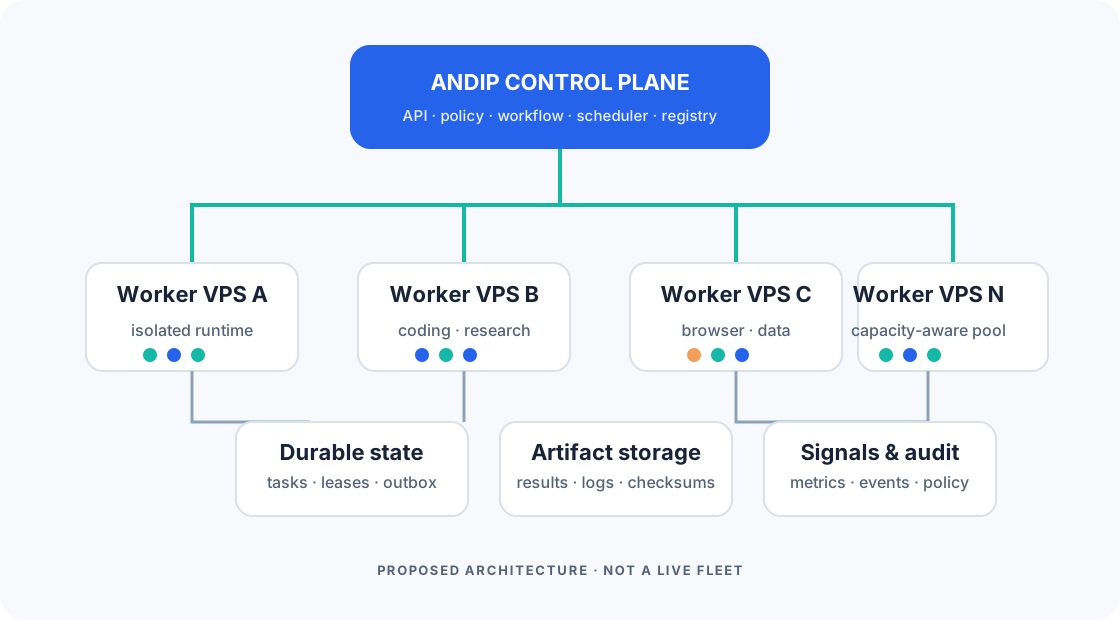
Running agents across multiple servers adds coordination work that local agent tools do not solve on their own.
Sessions, servers and tools are managed in separate places, with manual handoffs between them.
Agents compete for CPU, memory, browser slots, storage and model-provider quota.
Queue state, ownership, progress, usage and cost can be difficult to see together.
Usage limits and resource budgets need to shape placement—not arrive as an afterthought.
Lost workers can leave partial work, uncertain side effects and orphaned environments.
ANDIP aims to connect existing VPS capacity to a centralized workflow and policy layer. It is designed to plan work, select a compatible worker, reserve resources, supervise an isolated attempt and collect verifiable artifacts.
Existing agent tools can remain focused on local execution. The distributed layer coordinates placement, durable state, permissions, budgets and recovery across machines.
Capabilities shown on this site are planned or under engineering validation unless a source badge explicitly says otherwise.
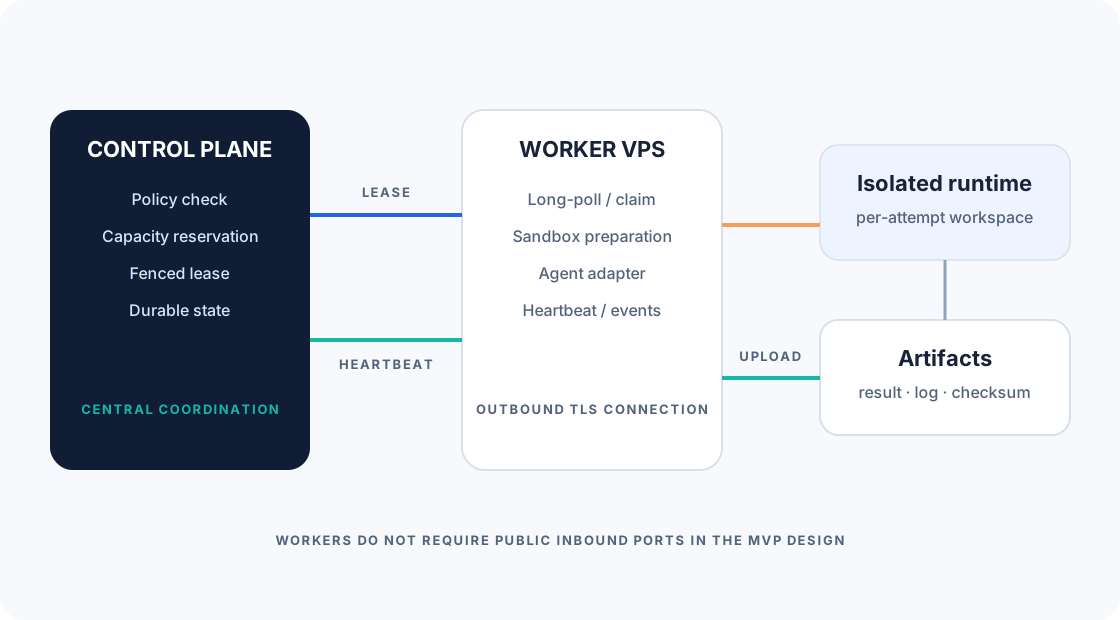
ANDIP combines reusable foundations with new distributed components. The capabilities below are planned or awaiting validation.
Register workers, evaluate available resources, and coordinate fleet state.
Track agent definitions, runs, attempts and terminal outcomes.
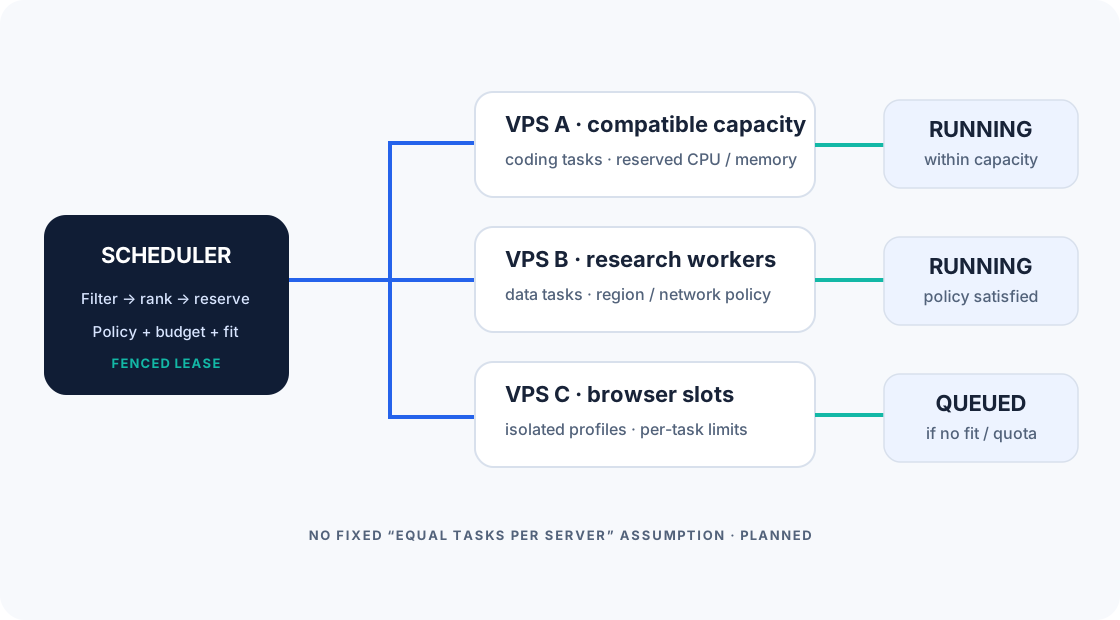
Place work according to capacity, compatibility, policy and budget.
Prepare a separate workspace, process boundary and browser profile per attempt.
Collect heartbeat, execution events, usage and reviewable operational history.
Reserve capacity, apply quotas and prevent new work from exceeding policy.
Persist task state and leases so recovery can reconcile interrupted attempts.
Use fencing, checkpoints, idempotency and human review where outcomes are uncertain.
Each stage is intended to create an explicit state transition, policy decision or artifact.
validate scope
organize tasks
reserve capacity
isolated attempt
events & usage
check outcome
store & clean
Conceptual workflow only. The public website is not the production ANDIP control plane.
ANDIP is intended to support mixed agent workloads without requiring every task to use the same model, browser, or framework.
Browser and data collection remain subject to authorization, website terms, privacy, and access controls.
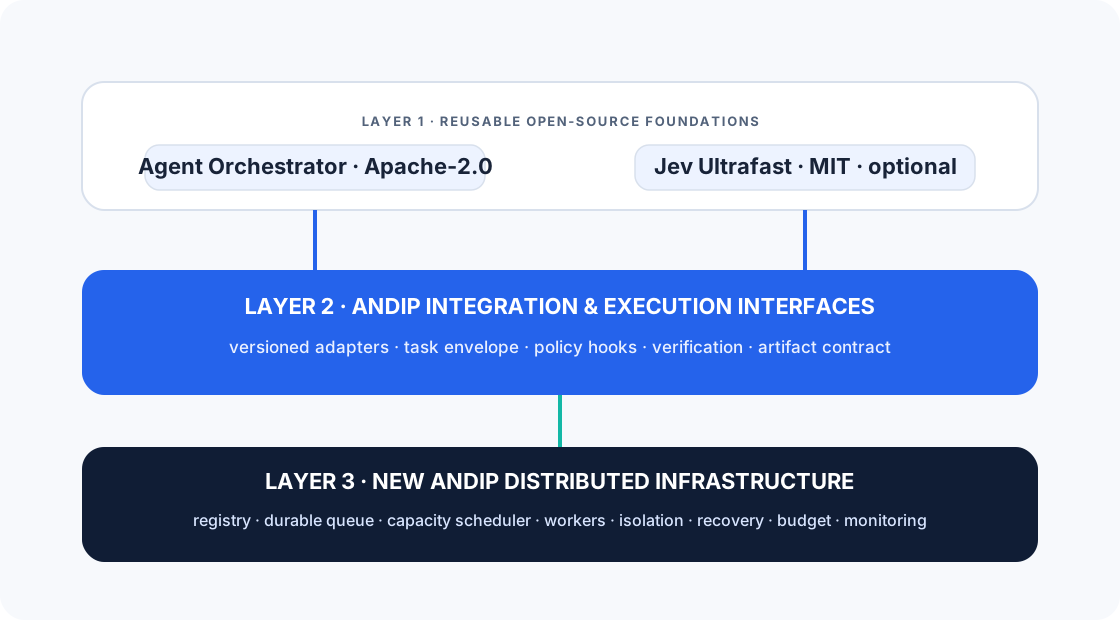
Agent Orchestrator provides local agent and session patterns. Jev Ultrafast is an optional browser adapter. The distributed registry, scheduler, durable queue, worker management, controls and recovery need additional engineering.
The upstream repositories are not owned by Technology and Media Services, LLC. ANDIP itself is not being represented as open source.
Read the attribution and integration notesEngineering proceeds through gates: a single-server vertical slice, multi-agent execution, multi-VPS placement, secure recovery, mixed workloads, then a reproducible concurrency test.
100 Concurrent Agents — Engineering Validation Target. This target remains subject to reproducible workload and failure testing; it is not a verified production capability.
Development milestones and beta availability are targets and may change as engineering validation progresses. No fixed launch day is announced.
Developers, infrastructure engineers, researchers and automation teams can register their interest.